



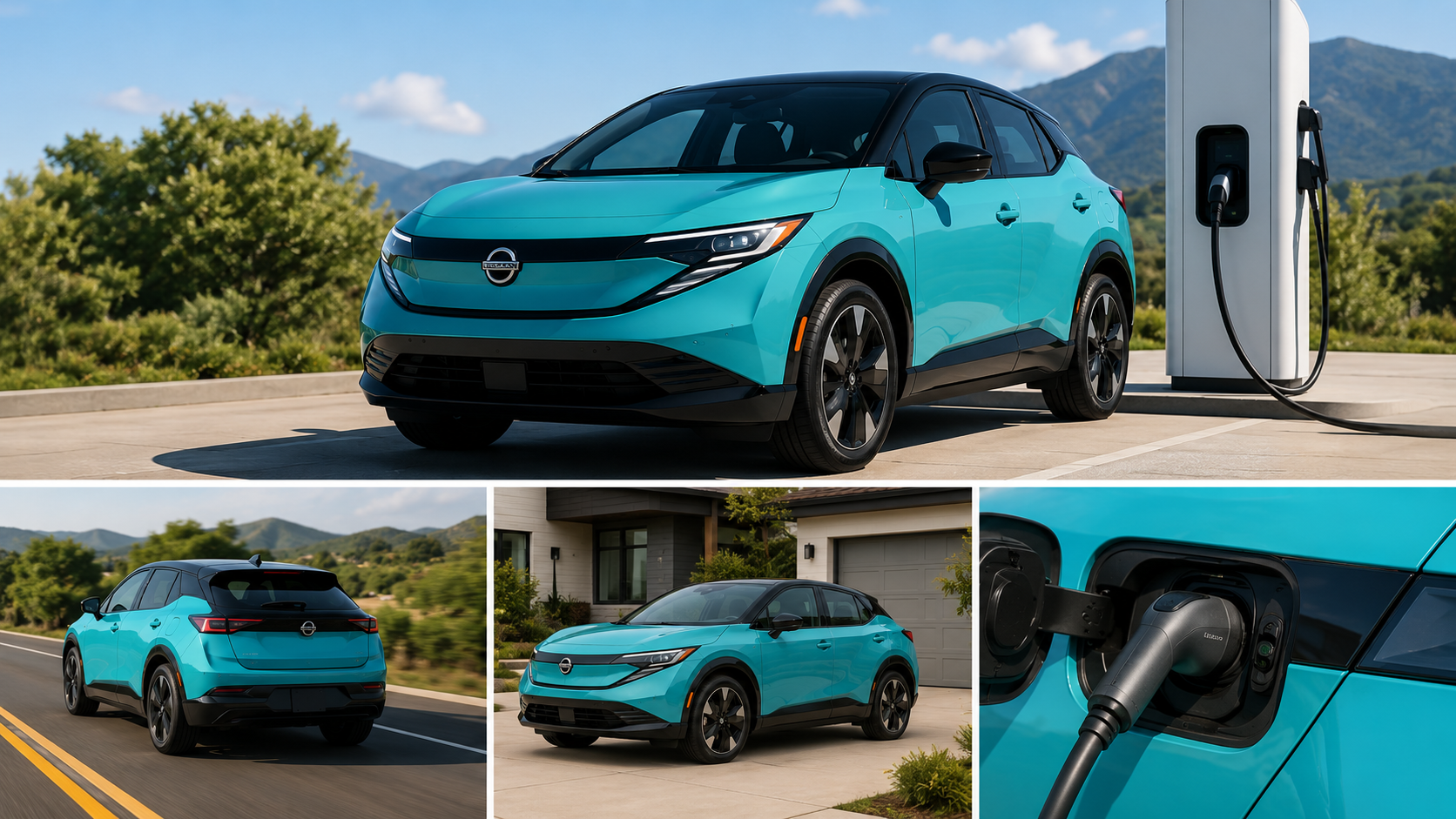
The switch to electric can seem like a monumental task, but recharging the 2026 Nissan LEAF isn’t difficult in practice and can be seamlessly incorporated into your routine. Equipped with a two-point charge port, an integrated NACS fast charger, and options to recharge both at home and use an ever-expanding public charger network, the LEAF gives you many charging solutions to stay on the road.
Here’s the breakdown of each option and how it can aid your EV journey, whether that’s an overnight charge at home or a more spontaneous longer drive.
1. What Is NACS Charging on the 2026 Nissan LEAF?
The 2026 Nissan LEAF has an integrated NACS port that enables it to connect to DC fast chargers using Level 3 and doesn’t require an adapter to use NACS charging with charging stations that support NACS chargers, including Tesla Superchargers. The LEAF driver has access to more than 29,000 Tesla Superchargers through its built-in NACS port, Nissan.The LEAF also has an additional J1772 charging port that drivers can use with Level 1 and Level 2 charging infrastructure, so drivers can use one setup for their normal daily commute and the other for the added capacity of the charging network at public charging stations.
2. How Does Home Charging Work?
More drivers will simply find themselves charging at home to ensure their LEAF is all set for the morning commute. A standard 1772 connector for charging on the driver’s side offers Level 1 (120 V) capability for less than overnight, “emergency” top-offs, or Level 2 (240 V), which Nissan suggests is the best and more frequent alternative for normal at-home charging. It could really just be a thing of plugging your car in when it gets home and leaving it to trickle as the workday progresses at home.
3. What Is Level 1 Charging?
Level 1 charging can be done from any 120-Volt outlet found in any home. This type of charging is the most convenient because there is no special 240-Volt installation necessary to get a higher rate of charging.Although it also offers the slowest rate of charge. Nissan states that this level adds 2-5 miles of range per hour. That makes this level more appropriate for overnight charging or drivers who do not commute very much.
4. Why Choose Level 2 Charging at Home?
Level 2 charging requires a 240-volt connection, enabling a much greater charging rate than your typical wall socket. The manufacturer stated Level 2 charging delivers around 10-25 miles per hour, on average, as it depends on a variety of factors and installed equipment at your location. Ideally, you’d want a specialist to install the home charging equipment correctly with a suitable outlet on your home’s circuit breaker. If you commute regularly, do multiple trips with your electric vehicle, or simply wish for home charging to be much quicker, then the Level 2 is something you definitely should invest in.
5. How Does DC Fast Charging Help on Road Trips?
This is where the LEAF’s internal NACS port comes in extremely handy.DC fast charging is meant to facilitate faster public charging when you’re away from the comfort of your own garage. Nissan states that the 2026 LEAF is compatible with NACS DC fast charging and that it will only take roughly 30-minutes to charge from 20% to 80% (though the actual time will vary depending on the charger output, environment, temperature, and the vehicle’s SOC).The quick charging stop now becomes a more realistic option when going on longer trips, and you just need to put in some miles quickly without having to waste hours at the charging station.
6. How Should You Plan a LEAF Road Trip?
Making the most of an EV road trip by taking into consideration these points for planning your stops
- Check your starting charge before heading out.
- Plan compatible charging stops along your route.
- Use the MyNISSAN app to help locate charging stations and plan routes.
- Allow extra time in cold or extreme weather, since temperature can affect EV battery performance.
- Keep a backup charging option in mind when traveling unfamiliar routes.
From the car’s side, the MyNISSAN app displays stations with charging capabilities, station info, charging control, etc.
7. Can the 2026 Nissan LEAF Use Tesla Superchargers?
That’s right The 2026 LEAF comes with a built-in NACS port and connects seamlessly with a Tesla Supercharger. Nissan drivers can find compatible Superchargers by using the My NISSAN app and its routing system. Nissan also provides an adapter for charging at compatible CCS fast chargers.
8. Does Weather Affect LEAF Charging?
Charging behavior and battery capability could alter due to temperature levels. Nissan states that temperatures that are overly hot or cold could change its charging capacity and habits. As part of your road trip prep work this winter, you might desire to provide yourself with more range and extra time just in case battery charging performance is impacted.
9. Is the 2026 Nissan LEAF Right for Your Driving Routine?
A better way of making the choice is to actually look at how you’ll be driving. If you do mostly short local trips and have easy access to home charging, then the LEAF can bring you the ultimate convenience of EV ownership. If you do a fair bit of longer-distance motoring, then the factory-ready NACS port and increasing public charging infrastructure offer alternatives for planning your charging stops.
Explore the 2026 Nissan LEAF at Peruzzi Nissan
Want to make the change to electric? Check out the 2026 Nissan LEAF to see its charging tech, available features, and EV specs at Peruzzi Nissan. Find a new LEAF to drive in our new Nissan inventory , or make an appointment for a test drive today.
.
![[Facebook]](https://www.peruzzinissan.com/blogs/385/wp-content/plugins/bookmarkify/facebook.png)
![[LinkedIn]](https://www.peruzzinissan.com/blogs/385/wp-content/plugins/bookmarkify/linkedin.png)
![[Twitter]](https://www.peruzzinissan.com/blogs/385/wp-content/plugins/bookmarkify/twitter.png)
![[Yahoo!]](https://www.peruzzinissan.com/blogs/385/wp-content/plugins/bookmarkify/yahoo.png)
![[Email]](https://www.peruzzinissan.com/blogs/385/wp-content/plugins/bookmarkify/email.png)
Connect with us
